

A Volunteer Fire Department in Poland
Volunteer fire departments are an essential part of Poland’s fire protection system. Although their members serve their communities as volunteers, they take on many of the same responsibilities as professional fire services, including regular training, emergency response, vehicle and equipment management, and tracking personnel certifications.
OSP Radlin II is one of these active units and the busiest volunteer fire department in its county. Its operational team includes 30 fully trained responders and handles around 200 emergency callouts each year.
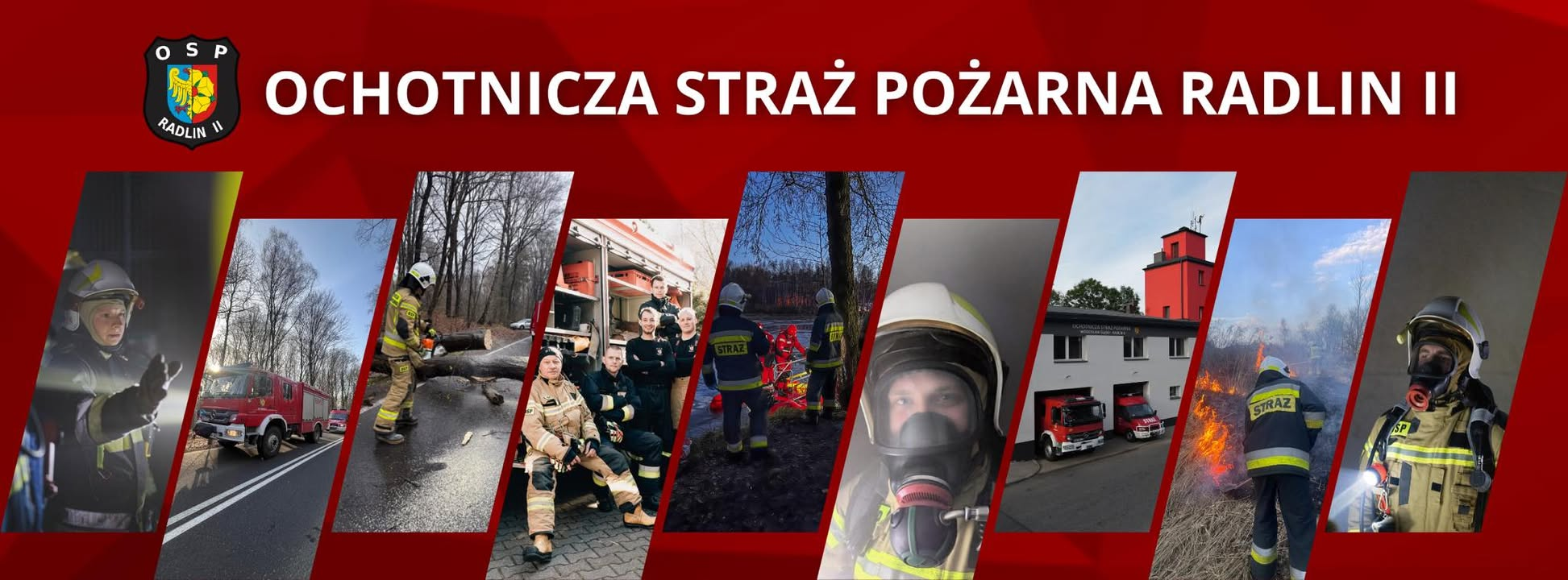
For every callout, the team must ensure that responders are properly qualified, vehicles are ready, and equipment is available. They also need to accurately record who participated, how long the operation lasted, how far each vehicle traveled, and which supplies were used.
To manage this work more effectively, the members of OSP Radlin II began searching for a system that could better support the department’s real operational needs.
From Google Drive to NocoBase
Previously, OSP Radlin II mainly relied on free cloud storage tools such as Google Drive to store and share information.
As incident records, member details, medical checks, rescue certifications, vehicle inspections, and equipment records continued to grow, important information became scattered across multiple files. There was also no consistent way to structure or update the data.
Cloud storage worked well for keeping documents, but it could not support the workflows needed to run an active fire department.
The team needed a centralized, secure platform that could be fully adapted to the department’s real operational needs.
To find the right solution, they tested more than ten similar platforms. After several rounds of evaluation, they chose NocoBase.
An Operations System Built by the Whole Team
From the start, the system was a collaborative effort. Members contributed to data entry, workflow design, and system maintenance based on their responsibilities, gradually creating a clear division of work.
- Some members handle administrative work, including:
- Tracking equipment inspection deadlines
- Managing routine medical checks
- Maintaining rescue certifications
- Handling funding applications and other administrative tasks
- Commanders record information from each emergency callout, including:
- Incident records
- Callout details
- Lists of participating crew members
The system is no longer maintained by a single person. Instead, the members directly involved in each area keep the information up to date. Today, it supports most of the fire department’s day-to-day operations.
System Homepage
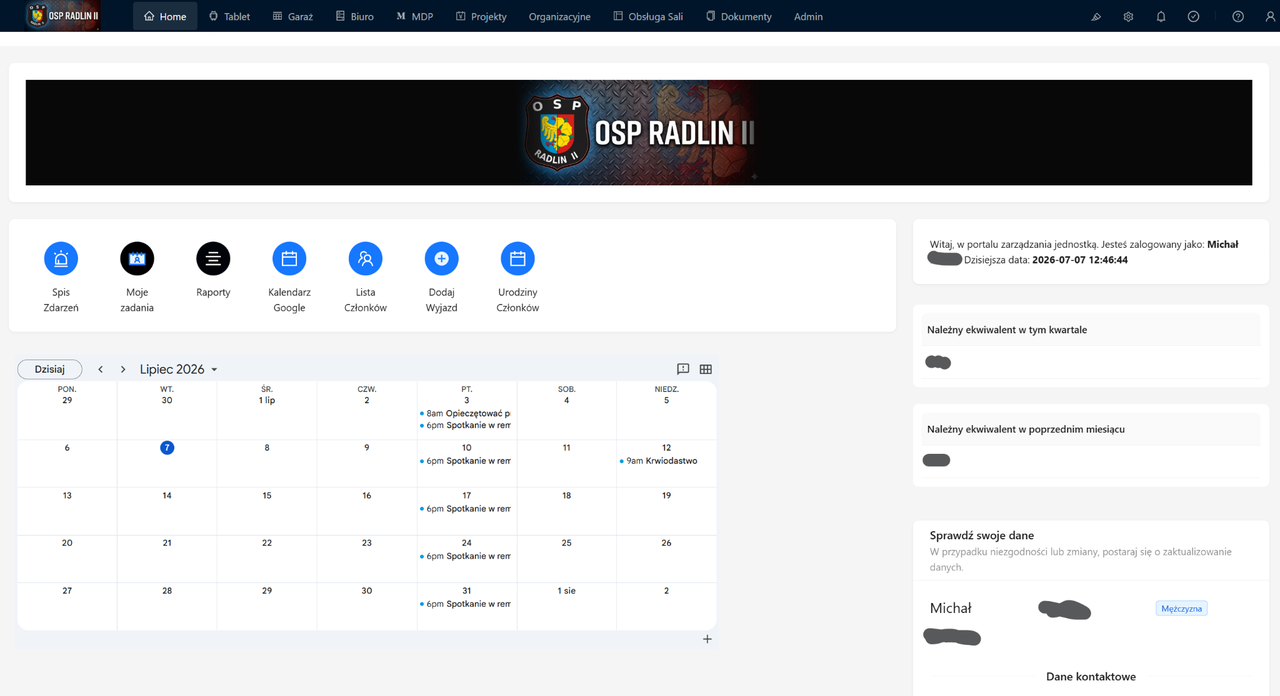
The homepage gives members a single place to access their work. Calendars, tasks, announcements, member information, and quick actions are all available from one interface, helping each role quickly find what they need.
- Track equipment inspection deadlines
- Manage routine medical checks
- Track rescue certifications
- Manage funding applications and other administrative work
- Record emergency responses
- Add incident descriptions
- Maintain crew participation lists
Emergency Response and Incident Management
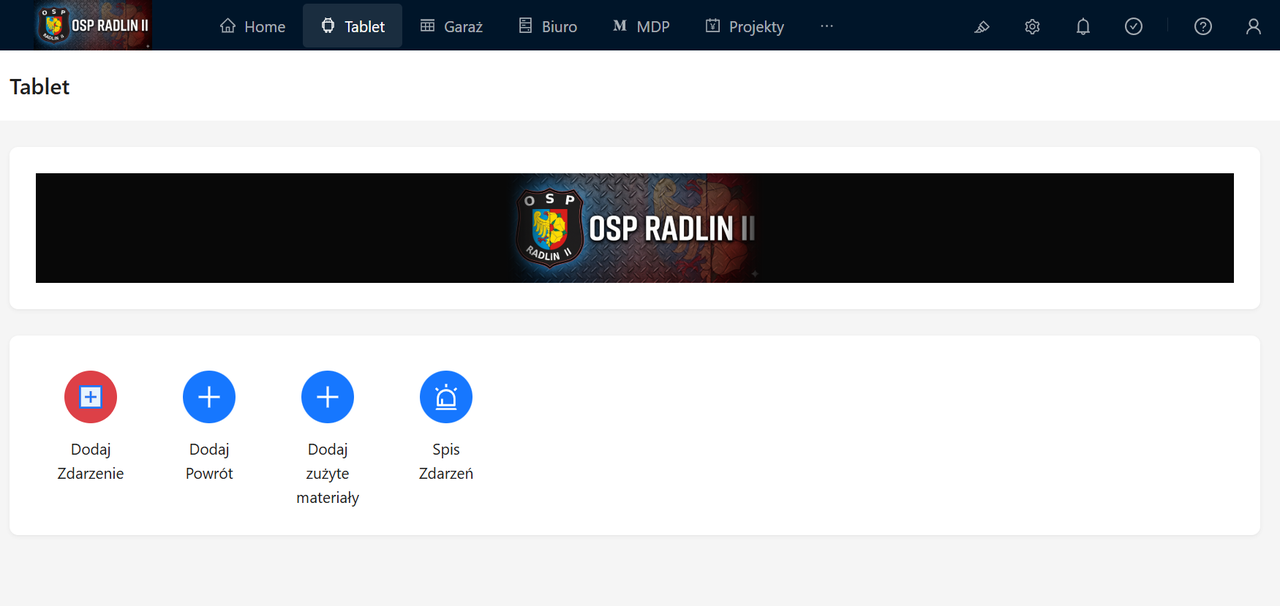
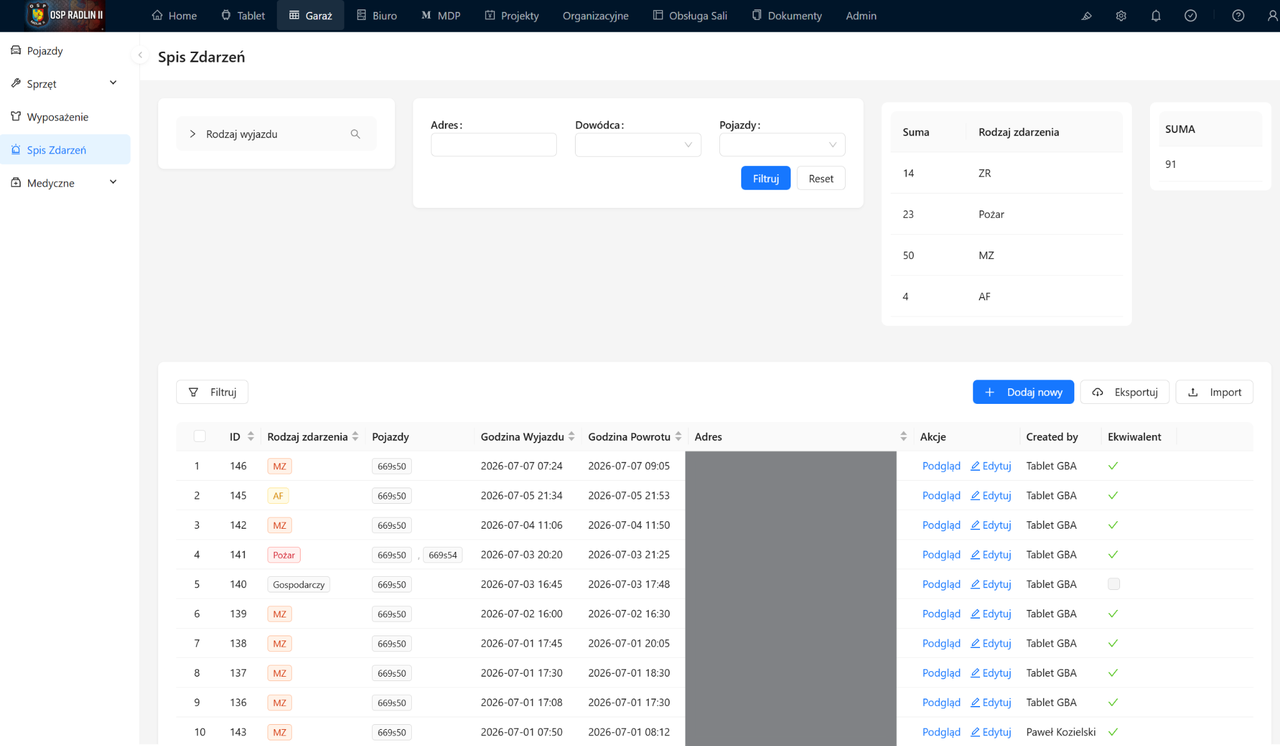
Members can quickly create emergency response records from a tablet or mobile phone. They can enter departure and return times, incident type, location, vehicles used, participating crew members, and supplies consumed.
NocoBase then turns this information into useful statistics, including the number and types of incidents, vehicle mileage, and the total time each firefighter has spent on emergency responses.
Personnel, Qualifications, and Administration
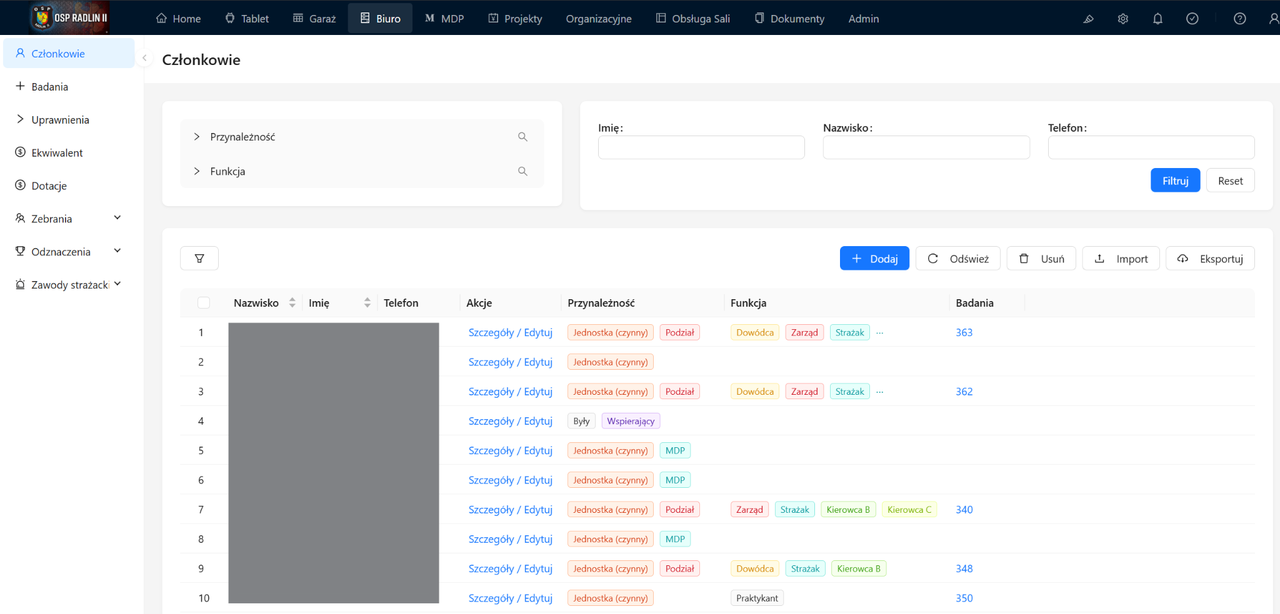
Beyond incident management, the department uses NocoBase to maintain member profiles, medical clearances, rescue certifications, and other specialist qualifications.
Members responsible for administrative work also use the system to track funding applications and other day-to-day office tasks.
The team has also created a separate project board for non-emergency work, such as fire station renovations, community events, and other internal projects.
Vehicles, Equipment, and Maintenance
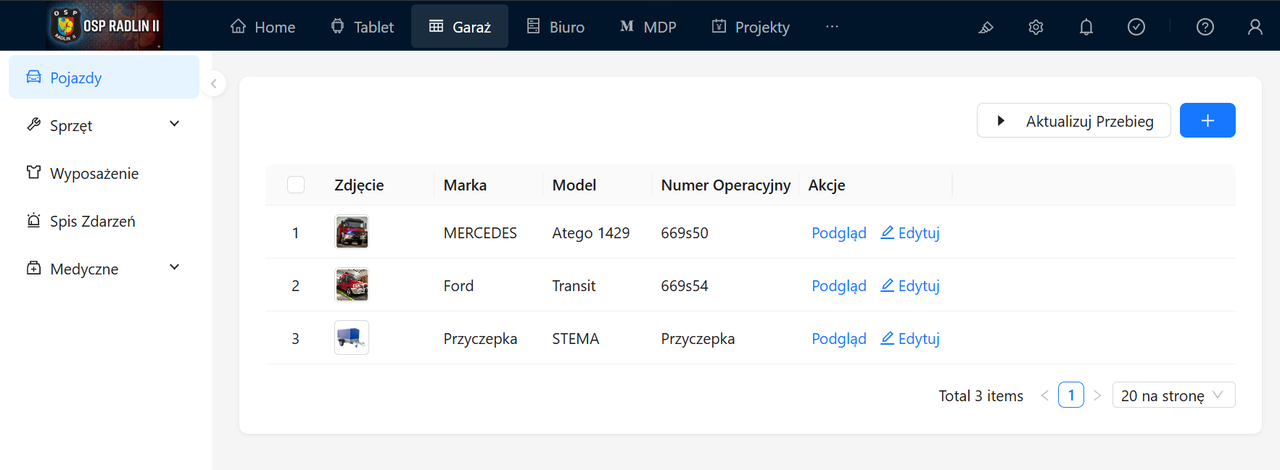
Fire engines, trailers, and firefighting equipment are all managed in the same system.
Members can record vehicle usage, mileage, technical condition, annual inspection dates, and upcoming equipment inspection or maintenance deadlines.
Automating Routine Work
As more information was centralized in NocoBase, the department began using workflows to automate tasks that had previously relied on manual checks and reminders.
Deadline Reminders
The system automatically monitors and sends reminders for important dates that may affect operational readiness, including:
- Member medical examination deadlines
- Fire vehicle inspection dates
- Member birthdays and other important dates
Emergency Response Hours
Based on incident records, the system automatically calculates how much time each firefighter has spent participating in emergency operations.
Team Communication
An automated announcement system allows management to share important updates more consistently through both email and in-app notifications.
A System That Continues to Grow
The OSP Radlin II system is now about 90% complete. It covers around 80 members across the organization, with approximately 20 active users regularly entering and maintaining data.
By bringing its data into one place, the department can more easily track emergency callouts, vehicle mileage, equipment status, and the time each firefighter spends on emergency responses.
More importantly, the system is not a one-time project that stops evolving once it goes live. As more members use it, new needs continue to emerge, and the team keeps adding new features, automations, and operational workflows.
OSP Radlin II has no dedicated software development team. Instead, its members have used their deep understanding of the department’s day-to-day work to gradually turn real firefighting operations into a system that can support the organization for years and continue evolving with its needs.
More Customer Stories:
- From Paperwork to Digital Public Services in France
- How to Deliver a Complex OA System in 3 Months with NocoBase
- Case Study: Digitizing Medical Manufacturing Workflows with NocoBase
- Software Vendor Boosts Delivery Efficiency by 70% with NocoBase
- Community Spotlight: Building a Real-World ERP with NocoBase
- Inside: How an 8-Person Team Delivers at Enterprise Speed
- Built an AI Multimodal R&D Platform in Days — with NocoBase
- NocoBase in Russia: Multi-Scenario Digital Solutions in Action
- NocoBase Enters German University Classrooms